
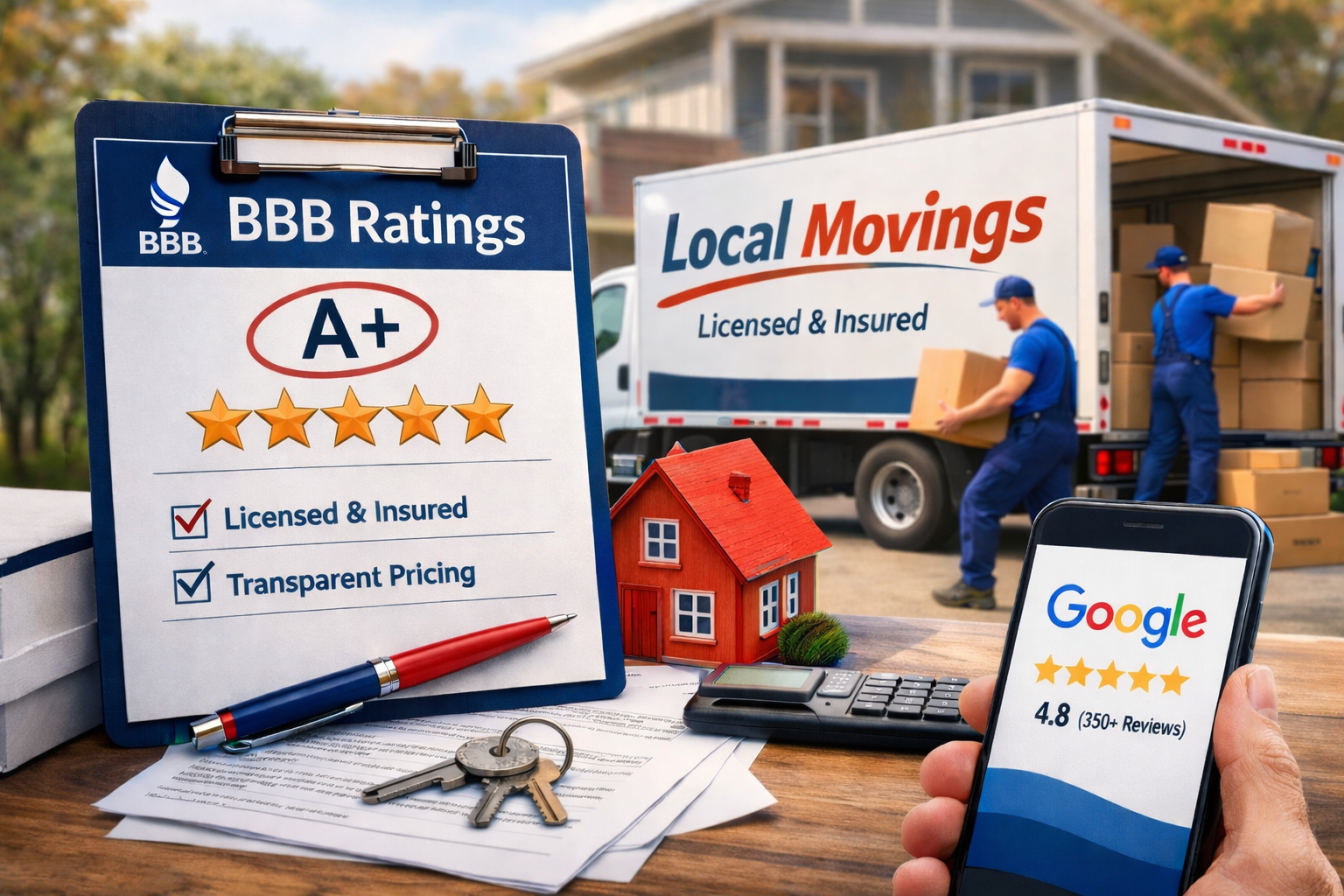
If you’re a homeowner, realtor, or property professional, you’ve probably heard this advice for decades:
“Check the Better Business Bureau first.”
And for many — especially baby boomers and long-time homeowners — the Better Business Bureau (BBB) still feels like the gold standard of trust.
But here’s the honest question we should all be asking in 2026:
Do BBB ratings really tell the full story when choosing a moving company?
Let’s unpack this carefully — and fairly.
What the BBB Is (and What It Isn’t)
The BBB is a complaint-publishing and business-reporting organization, not a regulator and not a licensing authority.
Even in its own published Terms of Use, the BBB clearly states that:
- It does not verify the accuracy of complaints or reviews submitted by users
- All information is provided to help consumers use their own judgment
- Businesses and consumers — not the BBB — are responsible for the content
In other words, the BBB is a reference point, not a final verdict.
That distinction matters — especially in service industries like moving.
Why Moving Companies See More BBB Complaints Than You’d Expect
Moving is emotional. It happens during:
- Home sales
- Downsizing
- Divorce
- Estate transitions
- Job relocations
Even when a move is completed professionally, misunderstandings can happen — particularly around:
- Time estimates
- Hourly billing
- Scope of work
- Customer expectations vs. signed agreements
The BBB allows any user to submit a complaint, and those complaints are not independently verified before being published.
That doesn’t mean complaints should be ignored — but it does mean they should be read in context, not isolation.
Who Still Relies Most on BBB Ratings?
From years of working with homeowners and realtors, a clear pattern emerges:
- Baby boomers tend to trust BBB ratings strongly
- Realtors and property managers use BBB as one data point
- Younger buyers rely more on Google reviews and referrals
This generational split is important — and reputable moving companies should respect it, not dismiss it.
What Actually Matters More Than a Letter Grade
If you want a clearer, more complete picture of a moving company, here’s what experienced realtors and informed homeowners look at today:
✔ Licensing & Insurance
A legitimate mover should clearly disclose:
- State registration
- General liability insurance
- Cargo coverage
- Commercial auto insurance
✔ Transparent Pricing
- Hourly rates upfront
- What is and is not included
- No surprise fees after the move
✔ Volume of Verified Reviews
A company with hundreds of Google reviews reflects consistent, real-world performance — not just edge cases.
✔ Written Agreements
Professional movers document expectations clearly before move day.
Where Local Movings Fits In
At Local Movings, we respect the role the BBB has historically played — especially for long-time homeowners.
At the same time, we believe trust today should be built on:
- Transparent, published pricing
- Clear written agreements
- Proper licensing and insurance
- Hundreds of verified customer reviews
- Direct accountability to our customers
We encourage anyone evaluating us to:
- Read our recent Google reviews
- Review our insurance documentation
- Ask questions before booking
- Compare apples to apples — crew size, rates, and scope
That’s how confident decisions are made.
A Practical Takeaway for Realtors & Homeowners
BBB ratings can still be useful — when viewed as one piece of a larger puzzle.
The smartest approach is not:
“What is the BBB grade?”
But rather:
“Does this company operate transparently, legally, and consistently?”
When you ask that question, the answer becomes much clearer.
Final Thought
Reputation isn’t built on a single platform — it’s built on patterns, professionalism, and accountability over time.
And that’s what good moves — and good business relationships — are really about.
